
Wind and solar power vary daily, seasonally and geographically. To fully harness the inexhaustible sources of renewable energy on our planet, we need to find ways to store large amounts of it for long periods of time, and move it over long distances — something that electricity and batteries alone cannot solve efficiently.
Ammonia enables long-term storage and transport of renewable electricity by converting it into a stable, liquid energy carrier that can be used across multiple sectors — from power generation and transportation to heavy industry, fertilizers and chemicals manufacturing.
Ammonia enables long-term storage and transport of renewable electricity by converting it into a stable, liquid energy carrier that can be used across multiple sectors.
*Hydrogen (H2) is a flexible energy carrier that allows for the storage of renewable energy at scale.
*Ammonia (NH3) is the ideal liquid solution for hydrogen transportation, as it liquifies at a technically feasible and commercially viable temperature (-33°C vs. -253 °C) and is compressed at a lower pressure (7 bar vs. 700 bar) when compared with pure hydrogen (H2).
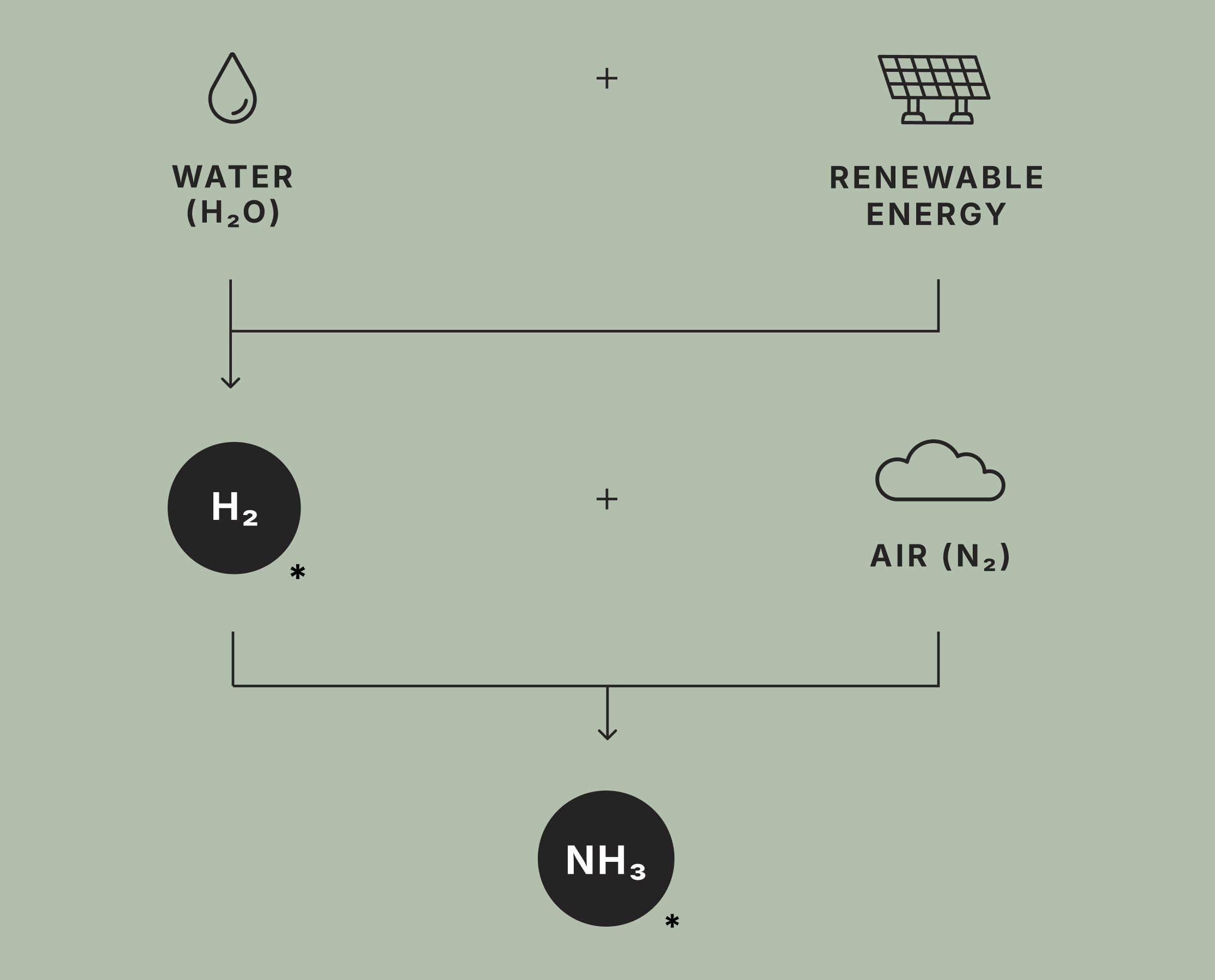
*Hydrogen (H2) is a flexible energy carrier that allows for the storage of renewable energy at scale.
*Ammonia (NH3) is the ideal liquid solution for hydrogen transportation, as it liquifies at a technically feasible and commercially viable temperature (-33°C vs. -253 °C) and is compressed at a lower pressure (7 bar vs. 700 bar) when compared with pure hydrogen (H2).
Unlike e-methanol and other synthetic fuels, ammonia is the only hydrogen derivative that does not rely upon a carbon input, which requires expensive, early-stage and scarce infrastructure.
The chemical and fertilizer industries have 100 years of experience working with ammonia, utilizing mature processes and widely available equipment.
Ammonia’s energy density by volume is nearly double than that of liquid hydrogen- its primary competitor as a clean alternative fuel - and it is easier to liquefy, ship and distribute.
.png)
* Not at scale yet
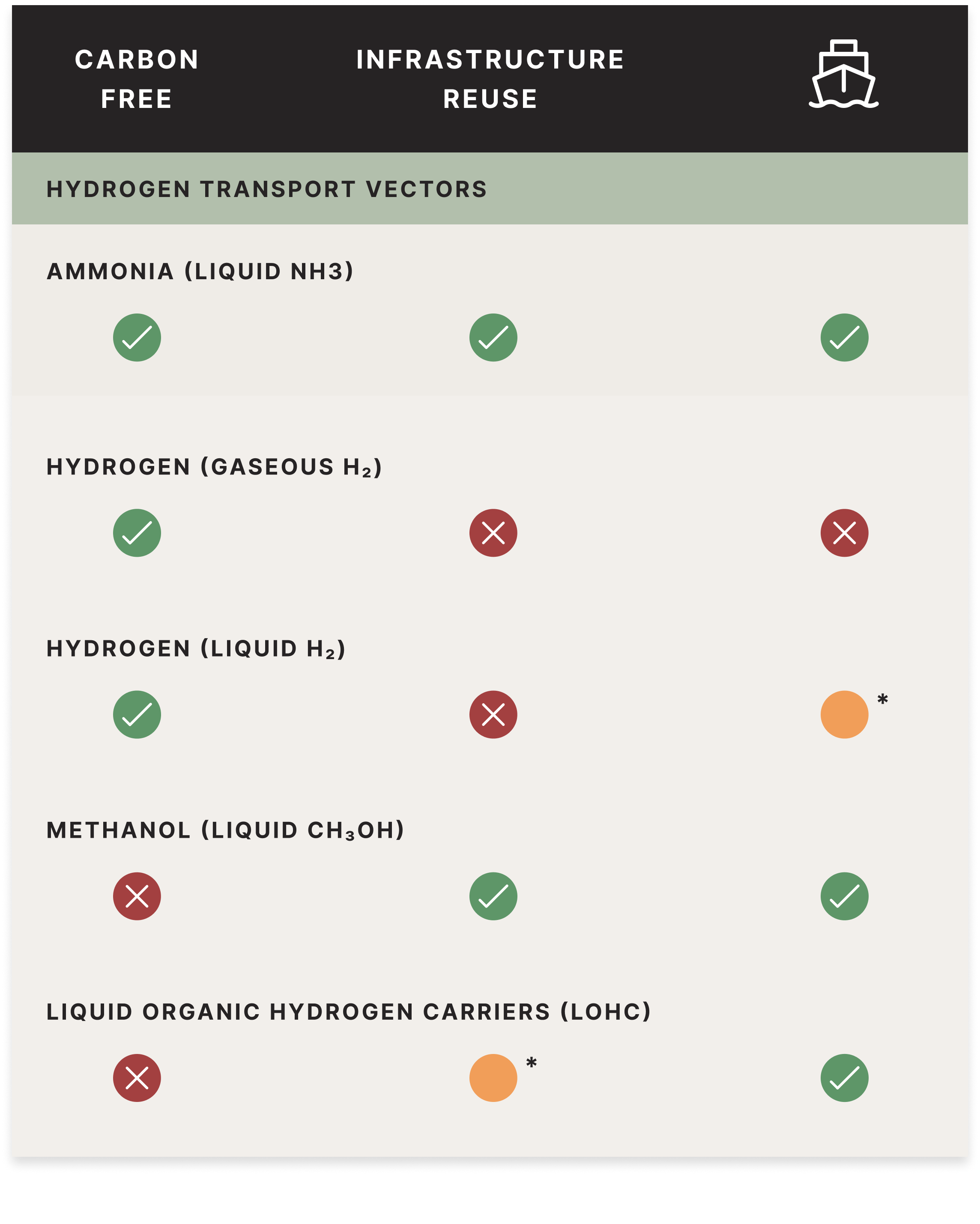
Unlike e-methanol and other synthetic fuels, ammonia is the only hydrogen derivative that does not rely upon a carbon input, which requires expensive, early-stage and scarce infrastructure.
The chemical and fertilizer industries have 100 years of experience working with ammonia, utilizing mature processes and widely available equipment.
Ammonia’s energy density by volume is nearly double than that of liquid hydrogen- its primary competitor as a clean alternative fuel - and it is easier to liquefy, ship and distribute.